

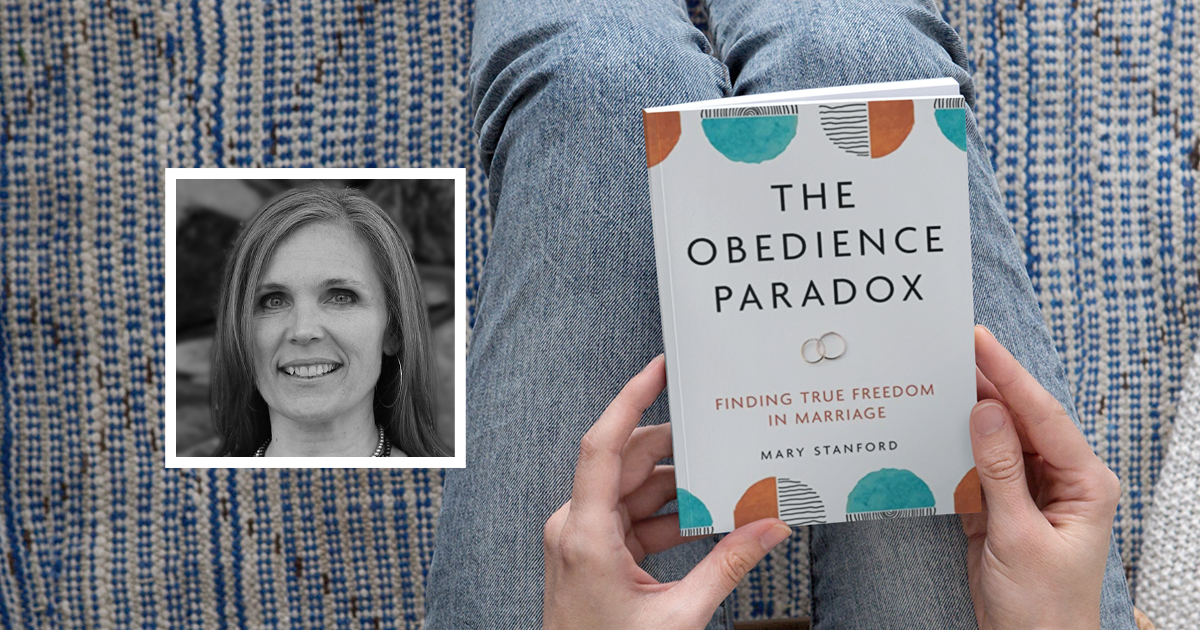
In this excerpt from her acclaimed new work The Obedience Paradox, professor Mary Stanford touches upon a subject argued about often in modern society: marriage. This excerpt appeared in the latest issue of Instaurare.
What usually causes discomfort for modern couples when addressing the topic of husbandly authority is the area of decision-making. Does a husband’s headship extend to decision-making? Certainly, we cannot deny that each member of the family has a proper sphere of activity in which free decision-making is possible and necessary. How can anyone be prepared for a fully human life if his or her freedom has not been developed? A tyrannical husband and father reduces his wife and children to slaves who operate out of fear. In such cases, they are stunted in their spiritual development, which he has failed to promote.
Spouses, as a natural part of their vocation to love, should seek to communicate as openly as possible regarding decisions that affect their family’s future—and should seek consensus. Pius XI clearly pointed out that a wife’s call to submission in no way implies that our free decision-making ought to be curbed—as a child’s is curbed at times, due to ignorance or immaturity. In fact, a wise husband often heeds a wife’s advice and defers to her expertise in many matters—particularly those regarding our children, to whose needs, feelings, and moral development she is particularly sensitive.
But every family goes through times when the husband and wife cannot reach a consensus. How does a Catholic couple proceed? Pope Pius XI taught us that the “order of love” of the “domestic society … includes both the primacy of the husband with regard to the wife and children, the ready subjection of the wife and her willing obedience.” Understanding the family as a kind of natural order, the Church has identified a husband’s “primacy” and a wife’s “obedience” as essential principles of that order. Pius XI continued:
“This subjection of wife to husband in its degree and manner may vary according to the different conditions of persons, place and time. In fact, if the husband neglect his duty, it falls to the wife to take his place in directing the family. But the structure of the family and its fundamental law, established and confirmed by God, must always and everywhere be maintained intact.”
This story comes from the latest issue of Instaurare Magazine, the official magazine of Christendom College. Read more from Instaurare here!
Pius XI understood that headship and submission will vary to a degree, as times and situations change. But he was firm in asserting that the structure of the family demands that such an “asymmetric” dynamic exists for the good of the whole. Put simply, it makes sense that someone in a family, for practical purposes, should have a final say that allows the family to function when it cannot reach a consensus. Both Scripture and Church tradition place that responsibility on the husband.
But is it biologically true that a man is somehow more suited to such a role? Can the natural masculine gifts somehow prepare him to wield such a responsibility in way that is superior to how we might wield it as women? Psychologist Greg Bottaro noted that biology may offer support for such a position:
“There is less connectivity between the right and left hemispheres in the male brain. This allows for greater compartmentalization. At the same time, there is actually more connection between the front and back of each hemisphere in the male brain. These two realities contribute to the masculine genius. Men are better at spatial organization and abstract thinking, both of which utilize intra-hemispheric communication. These qualities dispose a man to make decisions and solve problems that are related to the external environment. Intra-hemispheric frontal-lobe modulation is more natural for men, which makes it easier to detach from the emotional considerations of a situation.”
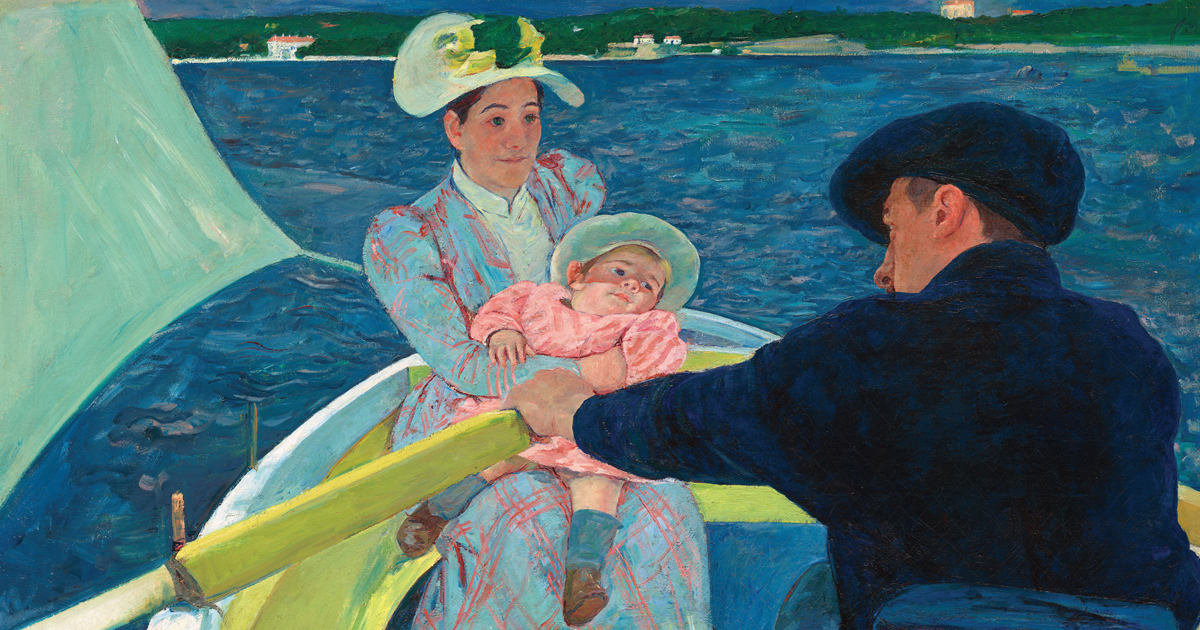
Mary Cassatt (1844-1926) “The Boating Party”
What does this mean? It means that a husband’s ability to “zero in” and abstract from the pull of emotions can assist him in situations where clarity is blurred due to strong feelings surrounding an issue. Recall also that a man tends to be future-oriented; we women, because of our attention to persons, are at times so consumed with tending to them in the present moment that we can find it difficult to abstract from a situation in order to gain perspective. The capacity to abstract from the particulars of a situation in order to consider the concept of what is good for the family as a whole is a masculine gift that the husband is to place at the service of the family.
The above reasoning, however, may still seem somewhat shaky. What guarantee do we have that in a given situation the course of action we propose as a wife would be less wise than a husband’s? Happily, another reason supports a wife’s deferring to her husband when the couple has reached a stalemate. This reason has nothing to do with a man’s strengths and everything to do with a woman’s. Teresa Benedicta reminds us that our nature as women gives us a distinct advantage in accepting our husbands’ decisions in difficult matters. Why is this so?
The feminine ability to subordinate our own interests for the sake of a personal relationship enables us to get on board more easily with decisions which we may question. Teresa Benedicta noted women’s special ability for “empathetic interest” in areas “far from [our] own concern,” which assists us in making a personal connection to others. When my mother was dating my father, for example, she learned everything about cars to get closer to him. I learned about football so I could have an excuse to hang out with my future husband on Sunday afternoons. Another mother I know—having only male children—has become an expert on all things military in order to bond with her sons. Because we have such a deep-seated orientation toward persons and relationships, we tend to give those relationships top priority—even if that prioritizing means we stretch ourselves to appreciate things toward which we might not otherwise be inclined.
For this reason, I have come to appreciate the characterization of Elastigirl, the mother of Pixar’s Incredibles family. A wife and mother’s superpower does seem to be that of being stretched and pulled, expanded and expended, to meet the many needs of our loved ones. While this superpower does not imply that we find it easy to accept a spouse’s differing decision, it does suggest that we women have a certain power to subordinate our own preference to his decision for the sake of our spousal relationships.
How would a man do in this kind of subordinating role? Being object-oriented, a man tends to focus more exclusively on the problem and struggles more to accept a decision with which he does not agree. He tends to concentrate so wholly on the issue at hand that he is generally less capable of entertaining personal considerations. (Recall that a man tends to identify with his actions—including decisions—thus tying himself to them in a way distinct from what we do as women.) So, when I, as a wife, insist on my way, I take a very real risk. Should my decision backfire, my husband may be less willing to take responsibility for its consequences.
He lives his headship most authentically, then, when he possesses a disposition of responsibility and accountability for his family’s flourishing. If the decision, however flawed, is his, he is more motivated to own it and to make it right when things go wrong, being bound to his actions in his distinctively masculine way. Furthermore, my ability to stand with him as a wife—because I can more clearly distinguish my love for him from my opinion of his decision—provides much-needed support in these situations. Together, the complementary gifts of husband and wife give couples the capacity to maintain family unity and weather the storms that never fail to accompany family life.
What is important to keep in mind here is that these types of final-say decisions should not be the norm in a healthy, sacramental marriage; they ought to be the exception. Those who argue against a husband’s authority often paint a picture of a dictatorial husband making final decisions on a daily basis while his passive, subservient wife keeps her opinions to herself. Such a couple is in need of an intervention! Healthy, honest communication is critical to keeping decision impasses at a minimum—and couples should never shy away from seeking counsel if they are struggling in this area. I often advise my female students to think twice before marrying any young man who seems overly keen on asserting himself as head of the house. Such a position can be quite burdensome, because a husband must make decisions for the common good of the family—not to satisfy his own whims as titular household head.
I once spoke with a woman whose parents had recently weathered a significant storm. Her father had opted to accept an early retirement package, buy and build on a large property, and invest what remained in a new and promising business venture. His wife was opposed. She did not think he would be happy retiring so soon, and she was concerned about the investment risks. She was honest and vocal about her objections, but he was convinced his plan was for the best—after all, he wanted to please her and build her her dream house! She submitted, and they went through with the plan. Shortly after building the new house and a beautiful barn, his investment venture collapsed. He was forced to reenter the workforce and was unable to keep up with necessary maintenance on the new buildings for nearly a decade. What could have broken his spirit was only a glancing blow, however; his wife’s love and tenderness toward him under these disappointing circumstances were precisely what motivated him to keep going for so many more years, working hard (at the expense even of his health) to make it up to her. When their daughter told me this story, she described them as having an incredibly happy marriage. Her mom’s strength in allowing her dad that fateful “final say” decision was her expression of unity that ultimately motivated him to “keep on” giving until they reached a better place.

The Bennet Family as depicted by artist Hugh Thomson in the 1894 edition of “Pride and Prejudice”.
When pondering the burden of decision-making, I am reminded of a fictional marriage that falls under the category of a “cautionary tale”: the Bennets of Jane Austen’s Pride and Prejudice. Mr. Bennet believes that it is imprudent to allow his flirtatious young daughter Lydia to go on a seaside holiday to Brighton, unsupervised by her family. But he refuses to insist that she remain at home, being instead worn down by Lydia’s—and more so, his wife’s—constant pleas that she be allowed to go on this trip. He gives in to the ladies’ desires, then, not out of a regard for what he thinks is best, but only to avoid unpleasantness. He admits that “we shall have no peace at Longbourn if Lydia does not go to Brighton.” Too weak to endure the disappointment and continued complaining of his wife and daughter, Mr. Bennet abdicates his role as head of the family. Unsurprisingly, when this choice that he did not make (but only failed to stop) backfires and Lydia elopes with an unsavory young man, Mr. Bennet still does not heartily step up to take responsibility. Instead, he is driven further away from his wife in the fallout, even as he is mortified by his own weakness in failing to stand up to her.
How many husbands and fathers today bypass headship because it can be such a headache? Too many men are willing to take the path of least resistance because they would rather not be the “bad guy,” particularly when it comes to saying no to their children’s wishes. When husbands “check out” in such a way, I cannot help but recall the desperate words of Elastigirl to her oblivious husband, Mr. Incredible, as their children’s fighting descends into chaos: “Bob, it’s time to engage!” Being willing to engage means being willing to lead, even at the risk of making a mistake. The universal truth revealed in the example from Pride and Prejudice is that avoiding the responsibility of headship means eclipsing the possibility of unity. The Bennets are driven further apart and experience only suffering in their marriage. The real-life couple who lost their retirement, however, was able to stay united and happy—even in spite of misfortune—because there was headship and submission, risk and receptivity, in their married life. It was painful but ultimately fruitful because only true unions can bear fruit, and only giving and receiving can create a union.
Headship, then, requires strength because it entails risk and responsibility, and these can be daunting. Those men seriously contemplating marriage who do not experience some trepidation at the prospect are simply not prepared for headship. (Add the fact that Paul presents Jesus Christ, God Incarnate, as their model to follow in assuming such a role.) But lest a man despair of living up to the divine standard, another human inspiration for living authentic headship can be found in St. Joseph. Though traditional opinion holds that Joseph’s initial response to Mary’s pregnancy—that of resolving “to send her away quietly” (Mt 1:19)—was fueled by his belief that she had been unfaithful, another interpretation is particularly encouraging for husbands.
Aquinas described how some of the Church Fathers believed that Joseph’s decision was motivated by something altogether different:
But according to Jerome and Origen, he had no suspicion of adultery. For Joseph knew Mary’s chastity; he had read in the Scriptures that a virgin will conceive (Is 7:14), and there will come forth a rod out of the root of Jesse, and a flower will rise up out of his root (Is 11:1); he also knew that Mary was descended from David. Hence, he more easily believed that this had been fulfilled in her than that she had fornicated. And therefore, considering himself unworthy to live with such great sanctity, he wished to hide her away, just as Peter said, “depart from me, for I am a sinful man, O Lord” (Lk 5:8). Hence, he did not wish to hand her over, i.e., to take her to himself, and receive her in marriage, considering himself unworthy.
This line of reasoning suggests that Joseph attempted to exit the stage not because he considered Mary unworthy but because he considered himself unworthy to step into the holy drama that was unfolding. Being asked to enter a role for which he felt unprepared and undeserving: this sums up the fears of many husbands. Joseph did not think he was holy enough, perfect enough; yet to be Mary’s husband and foster-father of Jesus Christ was what God asked of him. Note that the angel tells Joseph in his dream, “Do not fear to take Mary as your wife” (Mt 1: 20). Fear is the response of the humble to the holy. Mary, too, experienced it at the Annunciation when she was invited to become the mother of God.
What underlies both accounts is that Mary’s receiving and Joseph’s self-offering are both expressions of obedience. For a man to embrace the role of head is an act of obedience to God. His wife is most certainly not the only one called to obey here. John Paul II told us that “Joseph obeyed the explicit command of the angel and took Mary into his home, while respecting the fact that she belonged exclusively to God.” Here we see that true headship is a service, one that demands more than what seems humanly possible. This truth is why we must reflect on Gabriel’s words reminding us that “with God, nothing will be impossible” (Lk 1:37). John Paul II summed up the essence of real authority when he wrote, “Through his complete self-sacrifice, Joseph expressed his generous love for the Mother of God, and gave her a husband’s ‘gift of self.’” What a model for all husbands!
Read more from Instaurare Magazine here.
Contributed by Mary Stanford, adjunct professor at Christendom College.
Excerpt from The Obedience Paradox © Mary Stanford. Published by OSV. Used with permission, no other use of this material is authorized. www.osv.com.